“Emotional intelligence is about making good choices in emotional or social situations.” – Dr. Mark Scullard, Senior Director, Product Innovation, Wiley
While this is a straightforward definition, the practise itself is much more complicated. This video by Dr. Mark Scullard explains how to use DiSC to better understand emotional intelligence.
Our Psychological Needs
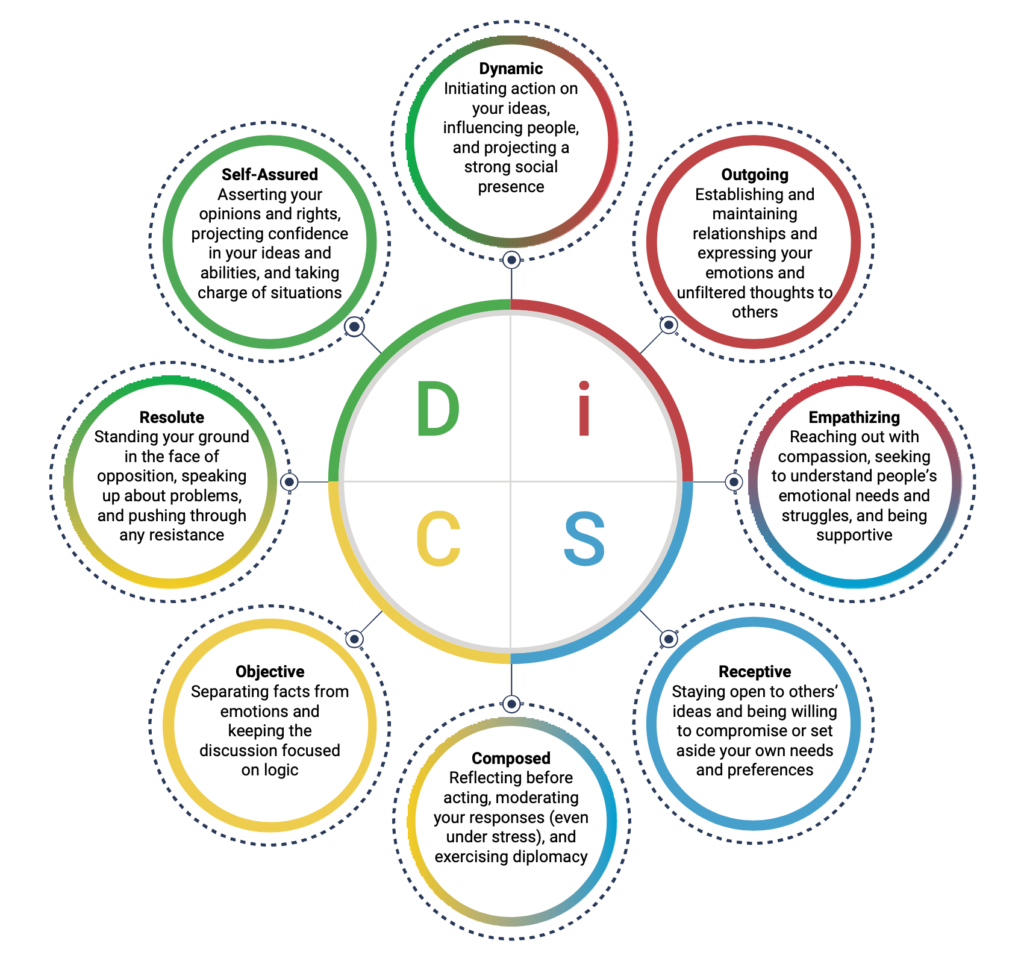
In a recent blog, we explored how DiSC can help us understand and better develop our behavioral tendencies. Dr. Scullard looks into this topic even further via emotional intelligence (EQ) and explaining the areas we struggle in and why. He says it’s important to ask: “What underlying needs drive someone to act like one of the DiSC behavioural styles?” and explains the different needs associated with each DiSC behaviour style.
- Dominance style needs to make progress and avoid weakness.
- Influence style needs connection, and to be seen and heard.
- Steadiness has a need for harmony, to make people happy, and acceptance and belonging.
- Conscientiousness needs to get things right, have autonomy, and avoid blame.
Understanding our needs on a deeper, psychological level prompts us to investigate why we make the choices we do and react the way that we do to certain scenarios, occurrences, and interactions.
“Bad behaviour and poor choices occur when there is a disconnect between healthy behaviour and psychological needs,” says Dr. Scullard. “The disconnect is often well beyond our awareness… [and what] makes emotional intelligence difficult is that [doing] the comfortable thing is sometimes the wrong thing.”
How can leaders help employees overcome natural tendencies and improve their EQ?
Dr. Scullard suggests starting with positive behaviour employees already demonstrate and figuring out the source of their strengths. Encouraging them to make healthier decisions – even when uncomfortable – helps build agility, gauge the emotional and social needs of a situation, and respond accordingly.
Furthermore, by providing time and space for employees to analyze their thoughts and patterns allows them to choose how to react. This leads to clarity, boundary setting and stronger decision-making.
The concept of emotional intelligence (EQ) was introduced by psychologist Daniel Goleman in his 1995 book “Emotional Intelligence: Why it can matter more than IQ”.
By teaching people to tune in to their emotions with intelligence and to expand their circles of caring, we can transform organizations from the inside out and make a positive difference in our world.
— Daniel Goleman
We are Authorized Partners of Everything DiSC and offer its complete product line including Agile EQ™. Contact us today for more information.
