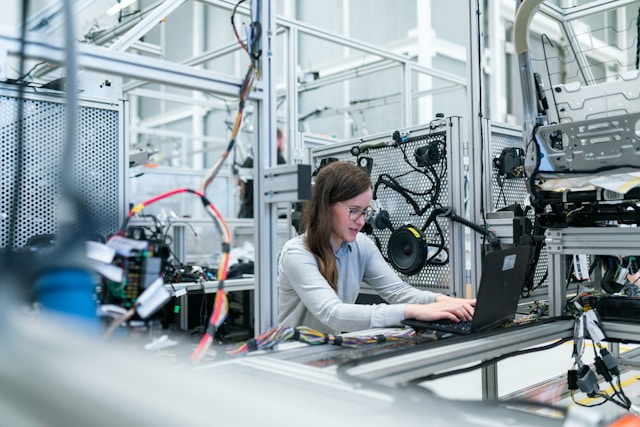
New technologies, automated systems, and digital tools are reshaping production floors across Canada. And with them, the skills employees need to succeed.
To keep up, organizations are moving beyond traditional training models. They’re embracing a more strategic approach: skills mapping and competency frameworks tied directly to roles and machinery.
Why Skills Mapping Matters
Manufacturing roles are often highly technical, requiring precision, safety awareness, and deep familiarity with specific machinery or processes. That is why a one-size-fits-all training program can’t meet those demands. Skills mapping allows organizations to identify, in detail, which competencies are needed for each role, be it mechanical, digital, safety-related, or tied to quality control.
By mapping out these skills, leaders gain a clear picture of their workforce’s strengths and development needs.
According to AIHR, organizations using skills-based operating models are 98% more likely to retain high performers and close to 60% more likely to anticipate and respond well to change.
This approach improves performance and helps organizations plan for future workforce shifts, ensuring they have the right people ready for the right roles.
Creating Learning That Closes Gaps
Once competencies are defined, learning pathways can be built to bridge the gaps. These pathways might include a mix of technical instruction, digital learning, coaching, and experiential exercises that align with real production challenges.
The key however when creating the learning is relevance.
When employees can see a direct connection between their training and their daily responsibilities—whether it’s mastering a new automation process or improving safety performance—learning becomes more meaningful and sustainable.
Measuring
Skills mapping also introduces a measurable component to learning and development. Instead of focusing on course completions or attendance, organizations can track progress against defined competencies. This provides tangible data that supports individual growth as well as organizational performance goals.
For manufacturing leaders, this means training investments can finally be linked to outcomes such as reduced downtime, improved quality, or higher employee engagement.
From Insight to Impact
We work with manufacturing organizations to design customized training solutions that go beyond instruction. By combining skills mapping, competency frameworks, and learning transfer strategies, we ensure that learning sticks, drives behavior change, and translates into performance improvements.
Because in the end, the goal isn’t just to train, it’s to transform.
