

In some way, each of us celebrated the entrance of 2025. This is seen as a new year, with new hopes and resolutions for us. Unfortunately, the months quickly pass by and our many ideas for new beginnings are often left unaccomplished. The fact is, 80% of individuals will have failed their New Year’s resolutions by February. This leaves us feeling it must be impossible to achieve the goals you want.
It is challenging to change our habits. Research tells us that 25% of heart and stroke patients do not make changes to smoking cessation, healthy eating or adding physical exercise. And their choice is life or death. However, there is hope. We can change our habits through deliberate actions by focusing on small, incremental changes, known as “tiny habits”.
We need to understand that our emotions drive our habits. To do anything repeatedly, we need to make ourselves feel good to want to repeat a behavior. Despite wanting to make changes, we often don’t because what we are doing now feels good. We may want to spend less time watching Netflix, but evenings this may feel good after a long day of work – so good we really don’t want to change that pattern.
Research shows that we operate in habit mode 45% of the time, which essentially makes us zombies as we operate on autopilot. Author Michael Bungay Stanier tells us we need to consciously manage our unconscious patterns to enable ourselves to make behavior changes. Without doing so, a desire for a new habit is simply wishful thinking. How do we do this?
Based on the work of Michael Bungay Stanier (The Coaching Habit), BJ Fogg (Tiny Habits) and Charles Duhigg (The Power Habit), here are some tips to ensure we change our behaviors.
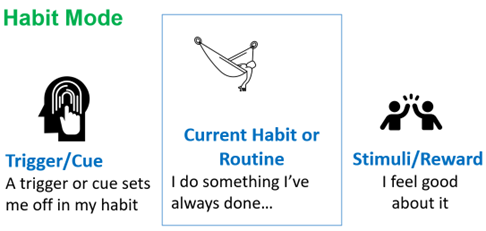
When we are operating in habit mode, some trigger in our life is a cue that set us off on the habit; we then do something we have always done; this provides some stimuli or reward that makes us feel good.
Here is an example:
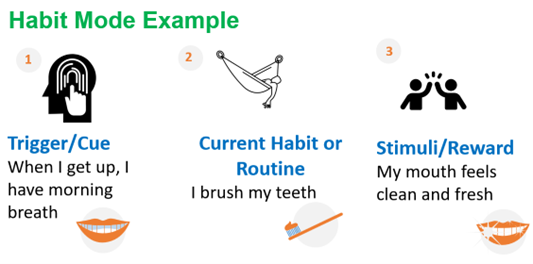
I get up in the morning and have morning breath. I immediately brush my teeth because it makes my mouth feel clean and fresh. This is a habit I would complete every day, no matter how late I was getting up – why, it feels good and it feels right for me.
We all have the best of intentions to achieve our New Year’s resolutions, however, we keep defaulting to our old behaviors because of how the behavior taps into our emotional feelings.
To make a change, consider:
- Consider your current habit or routine that you want to change.
- What is the trigger or cue that occurs to set us off on that habit or routine?
- How do we feel when we complete our current routine?
Once you have this vision, consider the change you want to make and what you could do in 60 seconds:
- When…(the trigger or cue) sets you off on the wrong pathway.
- Instead of…(the old habit) doing what you currently do.
- I will…describe your new habit – be specific and brief and what you can do in 60 seconds

The Key to Change
- Identify the habit
- Know the trigger to break the habit (what sets you off)
- Replace with a new behavior that you really want
- Consider the new reward so that you feel positive about this change
- Set your accountability system – reminders (post-its, alarms, a buddy)
