The 70-20-10 Learning Model
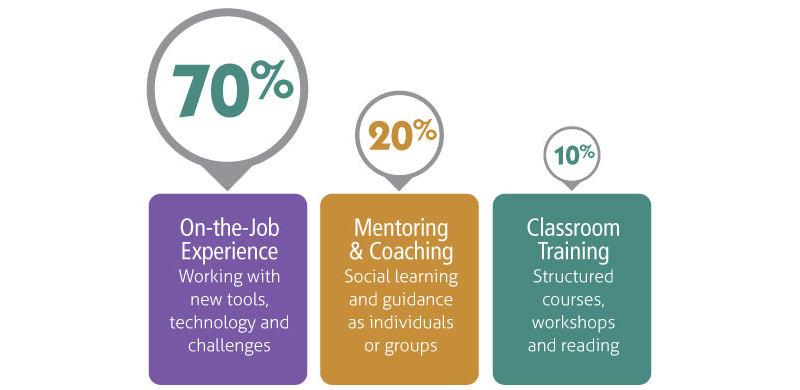
In the popular 70-20-10 learning model, 70% of development comes from on-the-job experience. While this hands-on approach is a powerful learning tool, it also carries risk when left unstructured.
Too often, on-the-job training becomes an informal handoff, where employees learn by observing others who may unintentionally pass along bad habits or incomplete information. This is usually due to unconscious competence—when a seasoned employee performs tasks so naturally that they skip steps or fail to explain critical details.
That’s where structured on-the-job training makes all the difference. When structuring on-the-job training, take the time to complete a job task analysis (JTA).
How to Structure Effective On-the-Job Training with JTA:
Start by answering these key questions:
- What are the job tasks?
Identify the essential functions and responsibilities of the role. - What are the steps within each task?
Outline the correct sequence in which tasks need to be completed. - What knowledge, skills, and abilities (KSAs) are required?
Define what’s needed to perform each step successfully. - What context matters?
Consider equipment, materials, workflows, and relationships that affect performance. - What are the performance standards?
Clearly define what success looks like for each task and step. - How will success be measured?
Establish objective criteria to determine whether employees are meeting expectations.
The Benefits Go Beyond Training
When you understand the job in detail, it doesn’t just improve training, it strengthens your entire talent strategy:
- Hiring: Target candidates who possess the right characteristics, KSAs, and experience.
- Compensation: Align pay structures with the true demands and responsibilities of the job.
- Training: Deliver learning experiences directly aligned with what employees need to succeed.
- Performance Management: Evaluate employees based on clear, measurable standards.
Structured training leads to better performance, higher retention, and stronger teams.
Want to learn more about how to complete a Job Task Analysis and build effective on-the-job training programs? Contact us today.
